Planting Tomatoes: The Ultimate Guide for Your Garden & Balcony
Fancy growing your own crisp tomatoes? With a few tips, the right tools and a little know-how, you can easily plant tomatoes – even without a garden!
Tomato Profile
✓ Sowing: late winter (greenhouse or indoors)
✓ Planting out: when temperatures are consistently above 15 degrees Celsius
✓ Harvest: early autumn (check for ripeness)
✓ Best varieties for beginners: Moneymaker, Harzfeuer
✓ Best varieties for balconies & indoors: Miniboy, Rotkäppchen, Bajaja
✓ Best varieties for garden beds: Paoline F1, Golden Queen
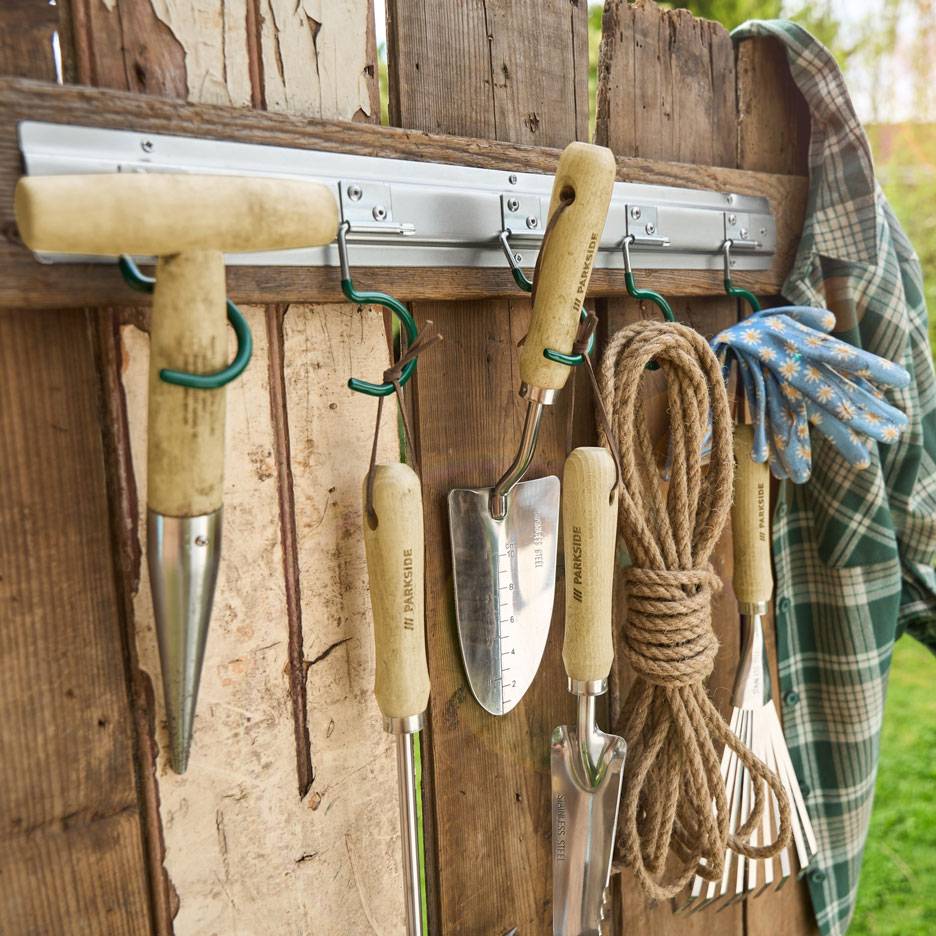
Planting tomatoes: what you'll need
- Seed tray
- Seed compost
- Pots
- Pot saucers
- Dibber/Widger
- Hand trowel
- Gloves
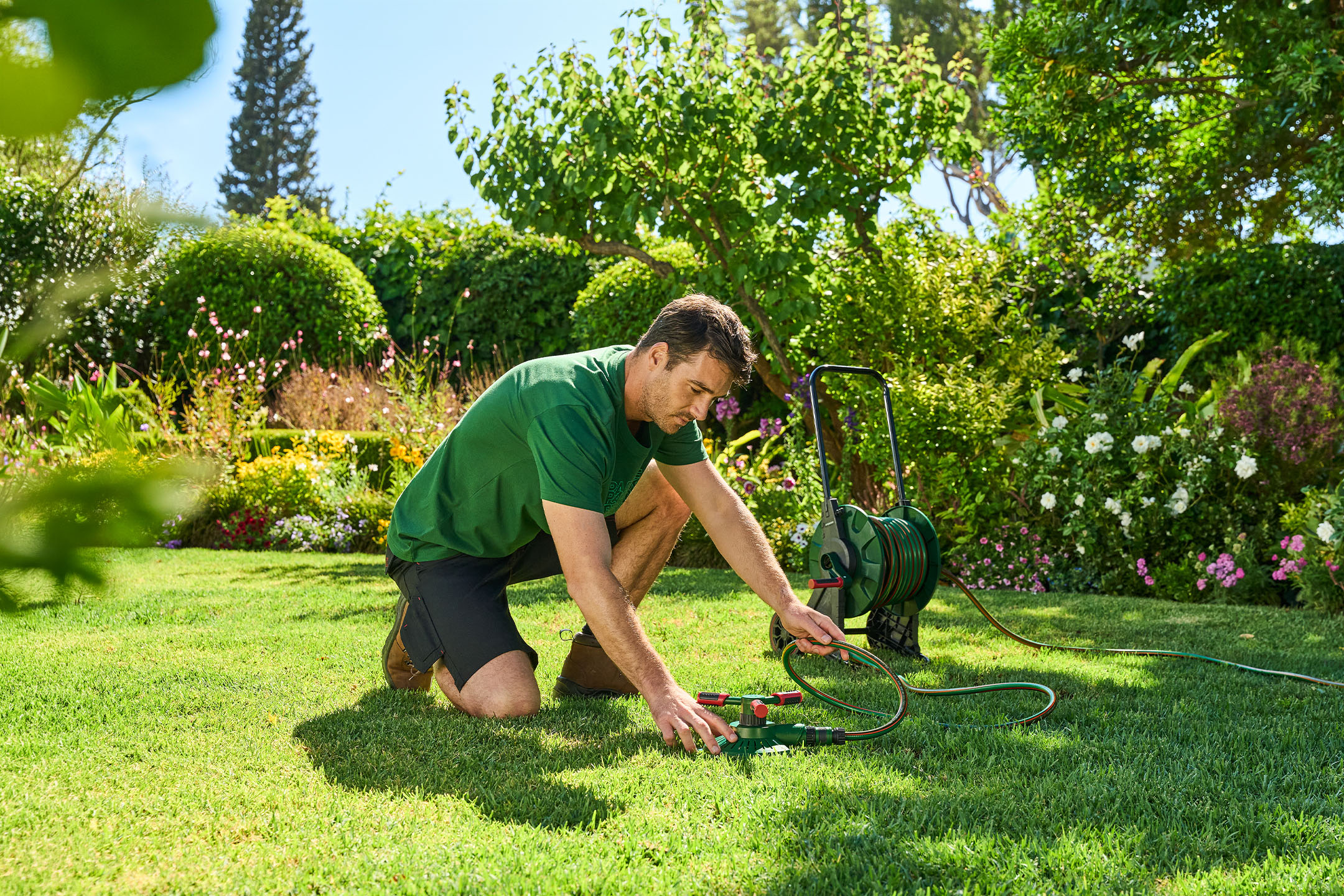
- Watering can / Garden hose
- Compost
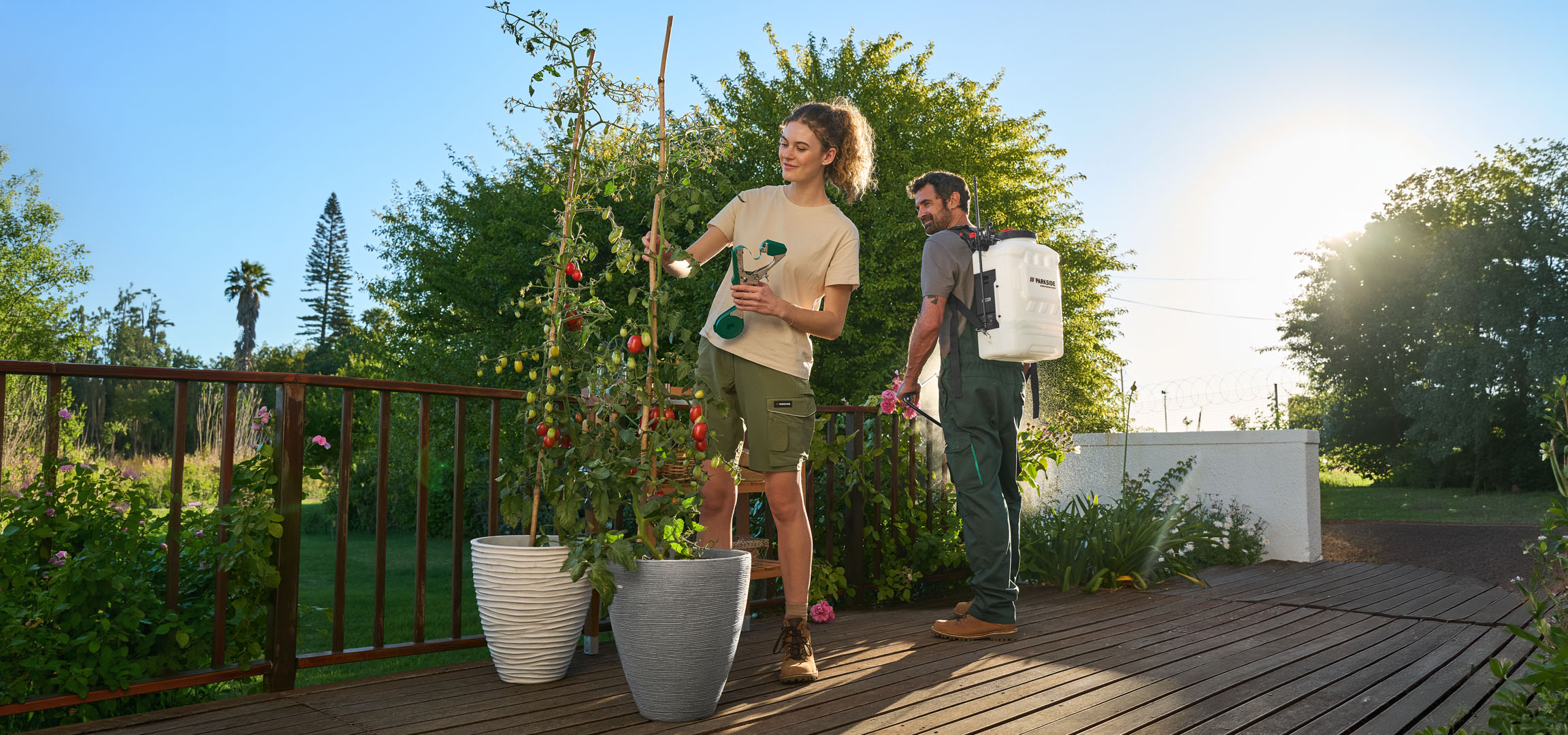
- Plant support
Growing Tomatoes at Home: What You Need to Know
Tomato plants don't just thrive in garden beds, they also grow perfectly well in planters and pots. This means you can start growing your own tomatoes in the garden, on the balcony, on the patio, or even indoors. No matter which you choose, these tips are essential:
- You must always start your tomato plants off indoors or in a greenhouse.
- Your tomato plants need plenty of space in their pot or bed.
- Make sure they don't get waterlogged. Choose planters with drainage or a drainage hole.
- Always choose a sunny spot – the more sun, the better.
- Use particularly nutrient-rich soil. Specialist tomato soil is ideal.
- Protect the plants from too much rain or wind. You may need to build them a shelter.
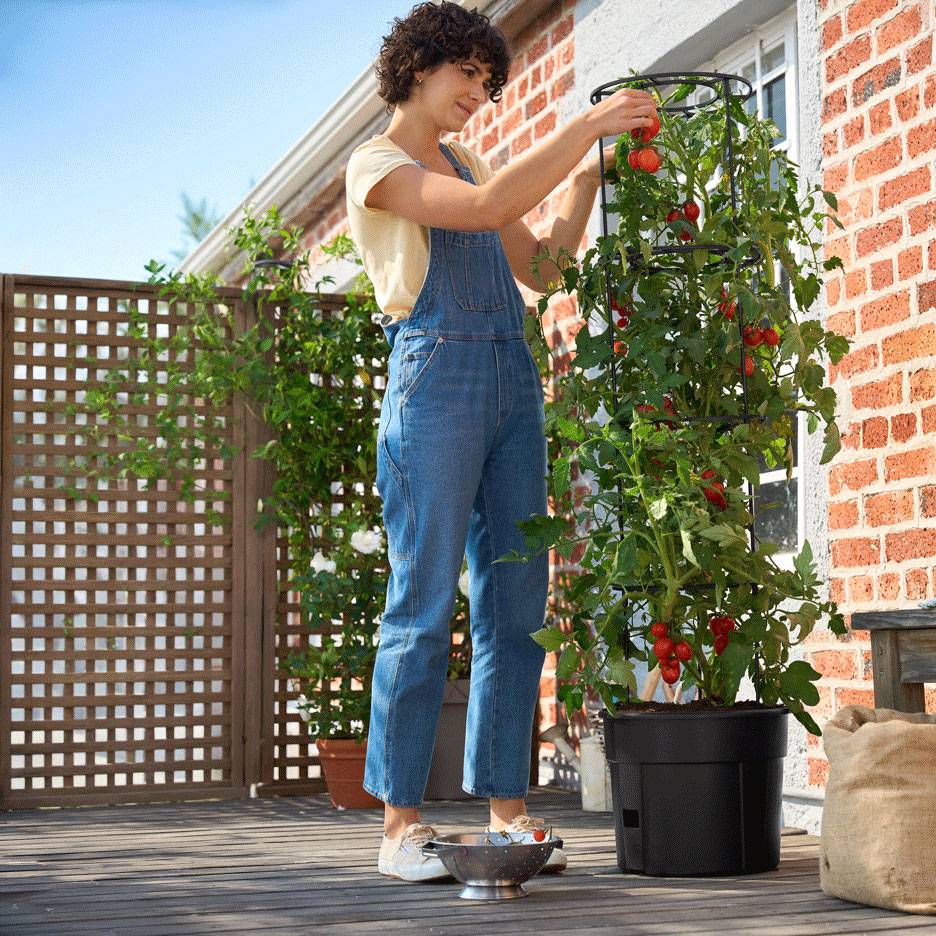
If you want to grow larger tomato plants in a pot, give each plant a container with at least a 20L capacity. Smaller, compact varieties for indoors will be happy with around 10L of space per plant. In the garden or in a raised bed, leave plenty of room between each plant – up to 80 cm (depending on the variety and growth habit).
Growing tomatoes in a greenhouse is particularly easy and gives a high yield. Here, the plants are safe from wind and weather, and it's always warm and bright. This means you can not only start your seeds here, but you can also plant them out at the beginning of spring. However, make sure you have these features:
- A roof that lets in light
- Heating
- Sun protection
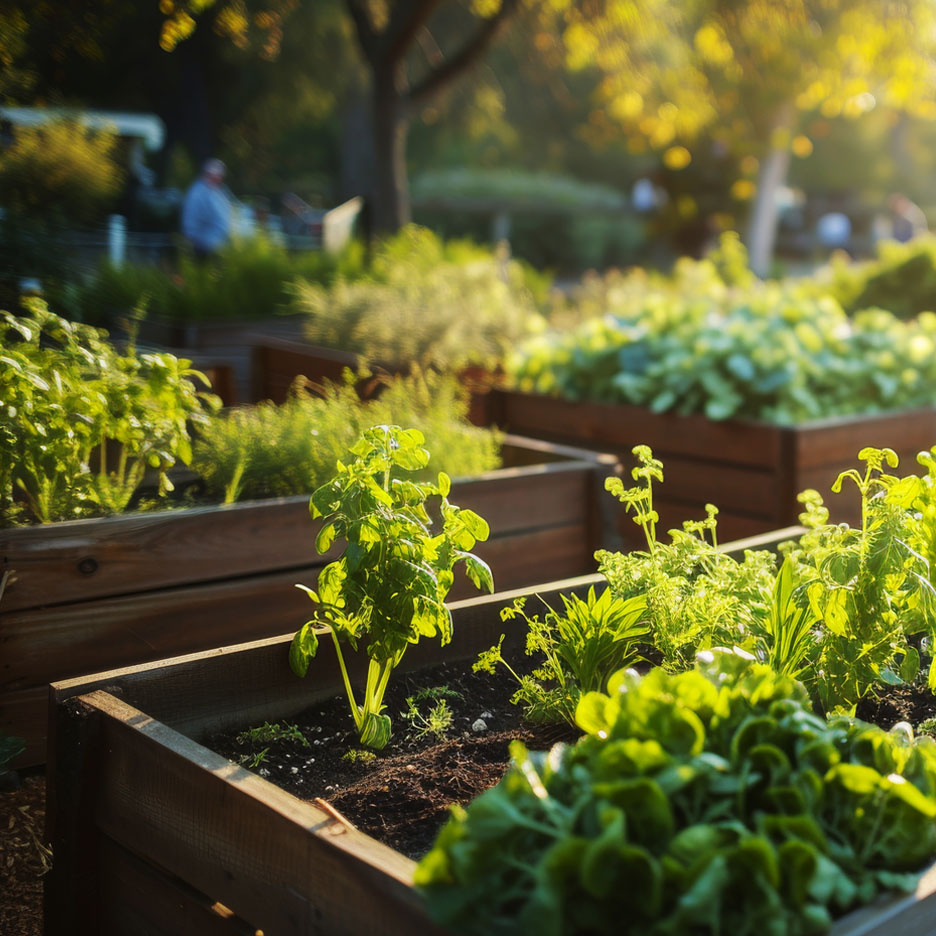
Top tip: You can plant tomatoes in a raised bed two to three weeks earlier than in a regular garden bed. This is because the soil temperature is higher. When setting up your raised bed, consider the height of the tomato variety: the taller the plant, the lower the bed should be. Otherwise, care and harvesting will be difficult.
Growing Tomatoes for Beginners: Here's How
Growing tomatoes from seed might not be the easiest gardening challenge, but with a few tips, you'll get the hang of it. If you make a few mistakes when starting your seeds, or you're not too precise with watering and feeding, your plants can often still be saved. And if not, you can always try again next season!
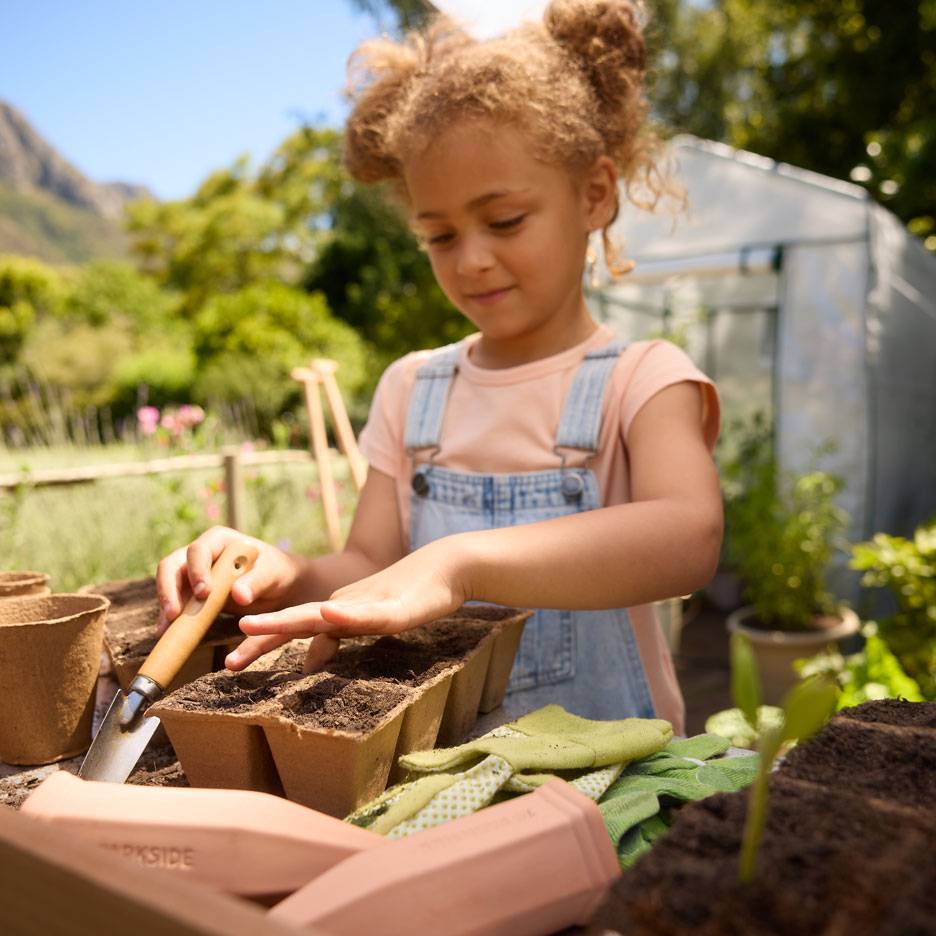
Step 1: Sowing
Sow the seeds in seed trays or individual pots with 4 to 5 cm of seed compost. Each seed should be placed in its own 1 cm deep hole, which you then cover with soil. The seeds need plenty of light, a spray of water several times a day and a room temperature of around 20°C. A windowsill is the perfect place for sowing.
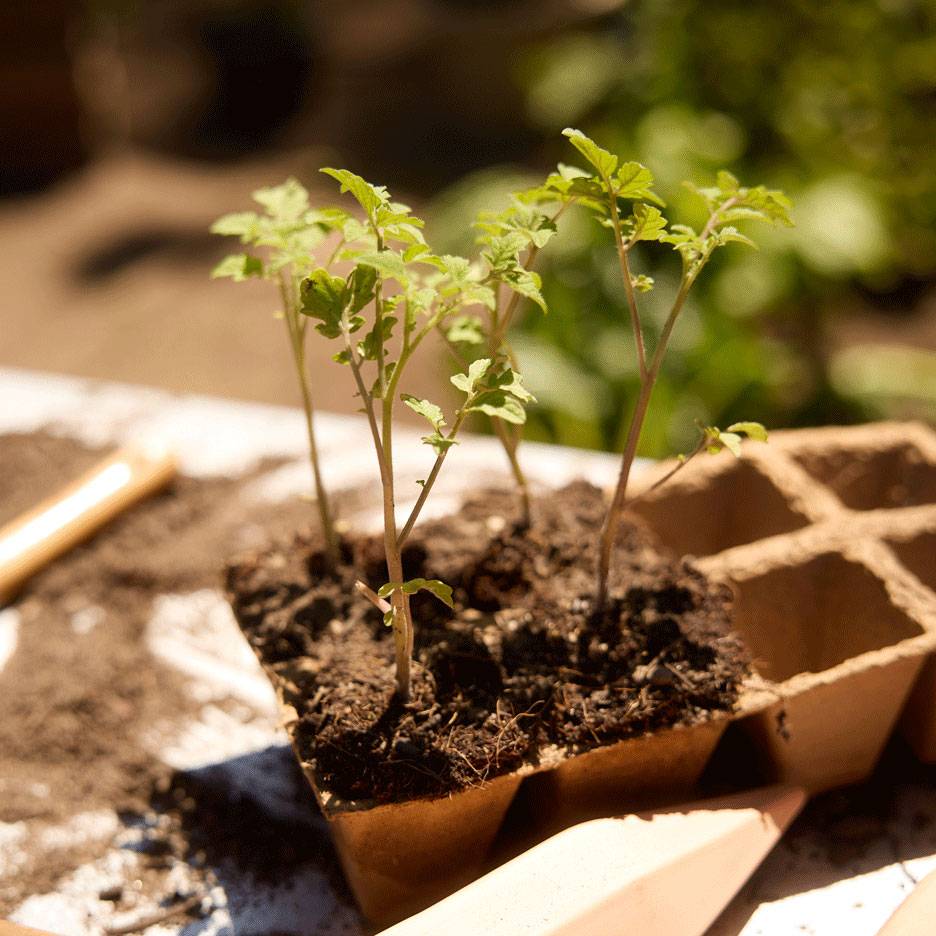
Step 2: Pricking Out
About three weeks after sowing, the seedlings will have developed their first leaves. Now you can prick them out. This involves separating the individual plants and potting them into separate pots or containers. Use a dibber to loosen the delicate roots. If you don't have one, a wooden skewer will do.
Step 3: Planting out
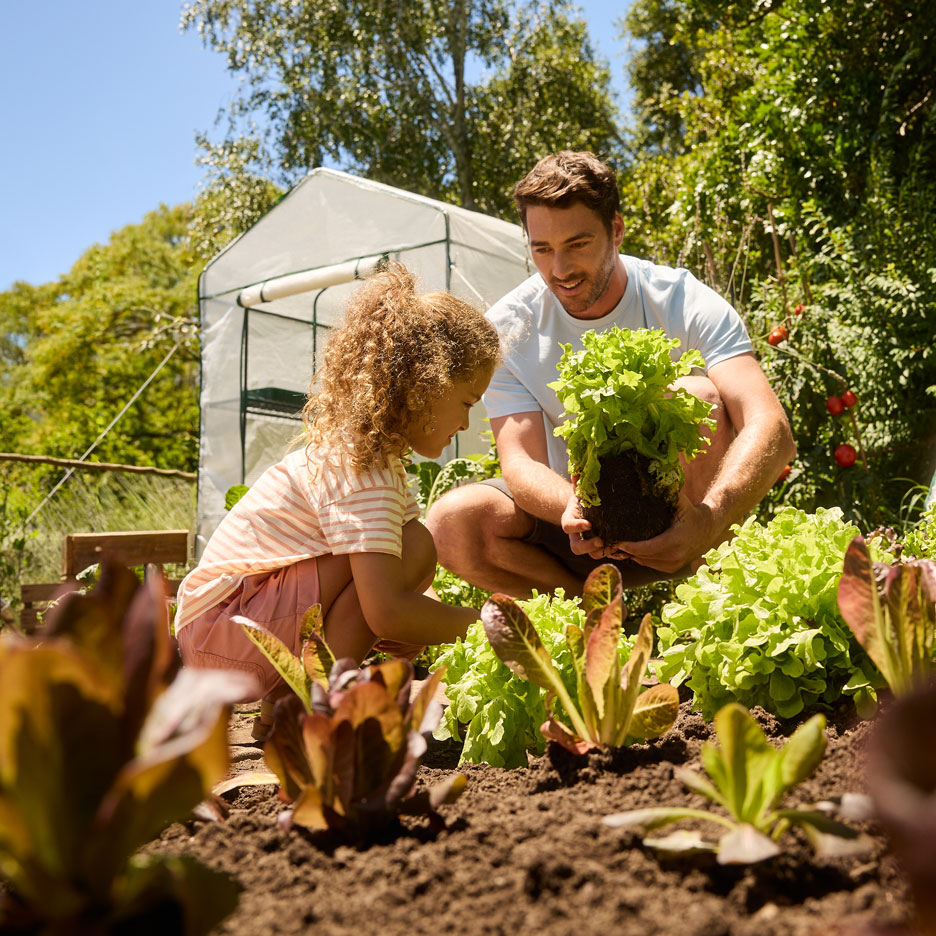
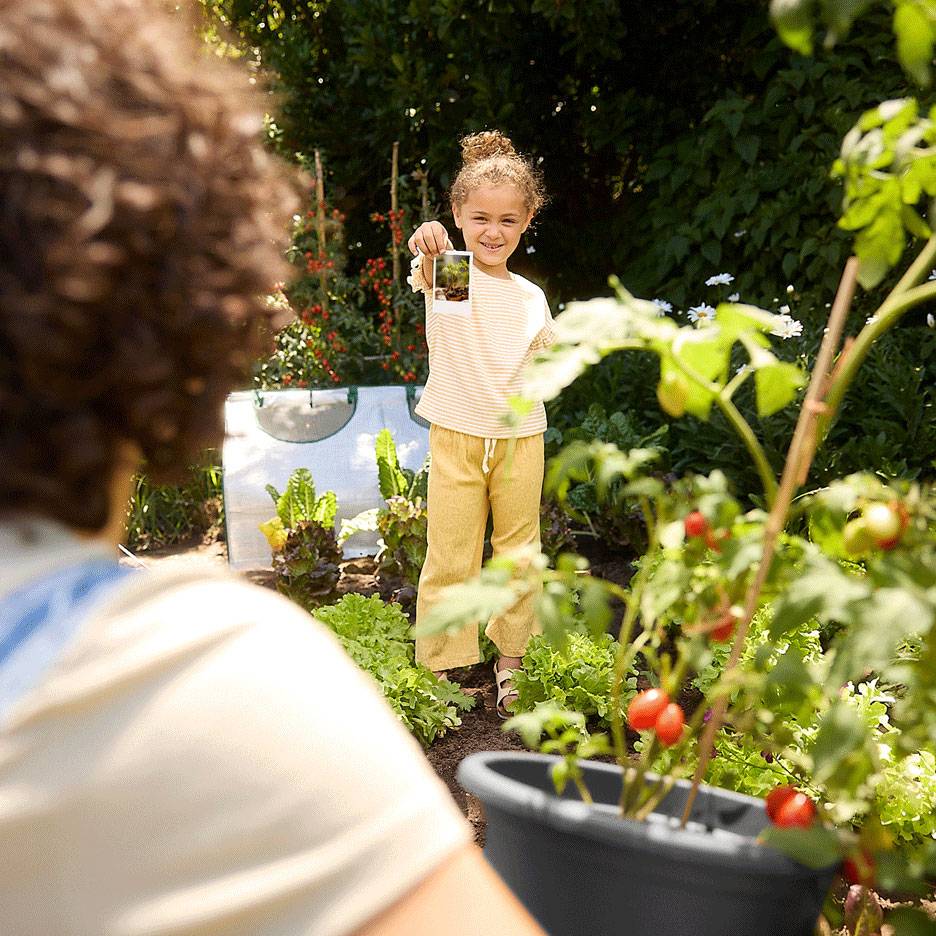
Three to four weeks after pricking out, you can plant your tomatoes out into their bed. Rake plenty of compost into the soil and dig planting holes with a spade or trowel. Carefully remove the tomato plant from its pot and place it in the hole. Firm the soil down and water the plant. Finally, install a plant support.
Step 4: Tomato plant care
To make sure your tomato plants get all the nutrients they need, you should feed them every two weeks. You can use a special tomato feed, compost or nettle manure.
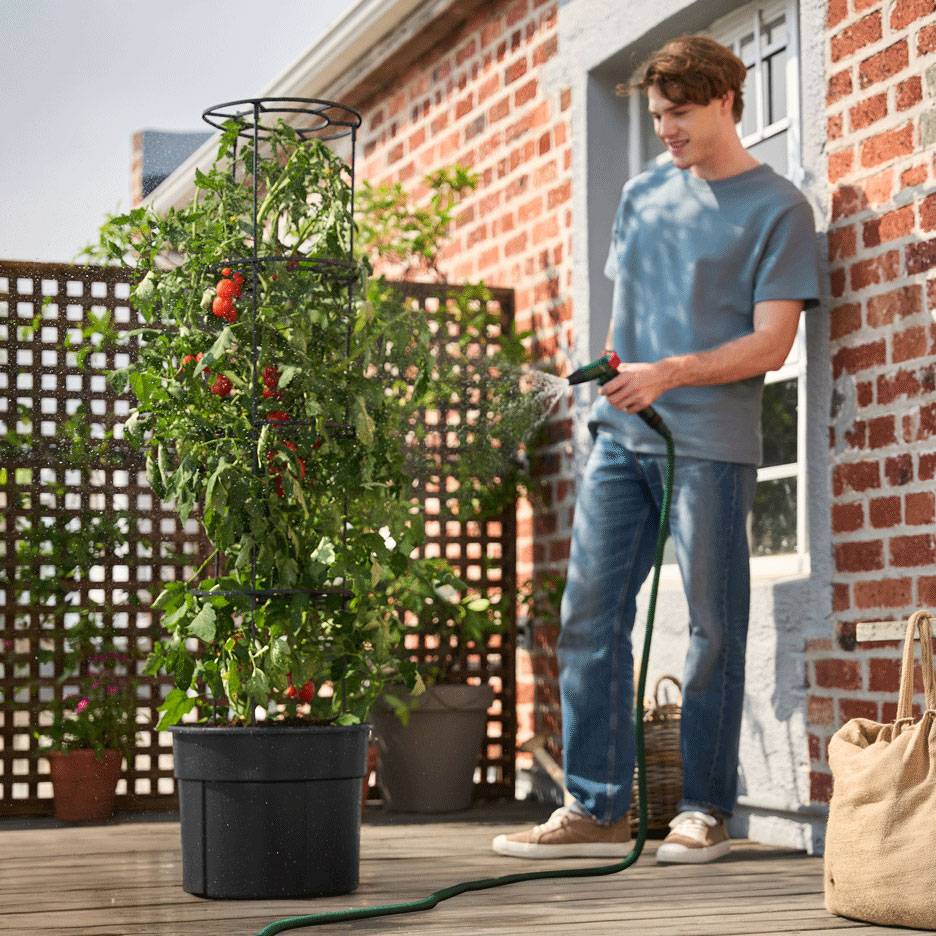
For the first two weeks after planting out, you should water your tomatoes daily with at least half a litre of water. After that, they only need watering when the leaves are drooping in the morning. It's important not to water from above, as this helps to prevent fungal diseases.
Regularly pinching out side shoots ensures the plant puts its energy into growing fruit. This involves removing the unnecessary shoots that grow in the leaf axils – the point where a new leaf stem branches off from the main stem. You can simply break them off.