How to Cook the Perfect Steak: Your Ultimate Guide to Sizzling Success
There's a moment every home chef knows well — the steak is in the pan sizzling away, and you're standing there hoping for the best. Too often, that moment ends in a steak that's either tough as a boot or grey all the way through. While this is a familiar moment for many, the good news is that cooking a brilliant steak is far more straightforward than most people think.
Whether you're working with a juicy ribeye, a tender fillet, or a classic sirloin, this guide will walk you through everything, from picking the right cut at Lidl to getting that perfect sear and knowing exactly when to take it off the heat.
Mastering the Basics: What You Need Before You Start
Choosing the Right Cut
The cut you choose shapes everything about your steak experience, including the flavour, the texture, and how forgiving it is to cook.
Here's a quick breakdown of the most popular options:
● Sirloin: A brilliant all-rounder. Good marbling, great flavour, and it handles high heat well. Perfect if you're still building your confidence. Try this sirloin steak salad for something a little different.
● Ribeye: The flavour king. The fat running through it (that's the marbling) bastes the meat as it cooks, keeping it juicy and rich. If you want to go all in, check out this perfect ribeye steak recipe.
● Fillet: The most tender cut, with a buttery, melt-in-the-mouth texture. Lower in fat than ribeye, but still deeply satisfying. Try it with garlic and herb butter for rich flavour.
● Striploin: Leaner than ribeye but with a firm, satisfying bite and excellent beef flavour. This makes a great choice for weeknight cooking.
Want to explore further? Check out our guide to different cuts of steak and how to choose the perfect one .
You'll find quality cuts across all of these at Lidl, without the eye-watering price tag of a restaurant butcher counter.
Essential Tools and Ingredients
You don't need a professional kitchen, but you do need a few tools. Here's what we recommend you have on hand:
● A heavy-based pan — cast iron is ideal, but a good stainless steel frying pan works too
● Tongs (not a fork, as piercing the meat lets the juices escape)
● A meat thermometer (more on this below — it's a game-changer)
● Neutral oil with a high smoke point, like sunflower or rapeseed
● Good quality butter, garlic, and fresh thyme for basting
● Flaky sea salt and freshly cracked black pepper
Preparation is Key: Getting Your Steak Ready
Bringing it to Room Temperature
Take your steak out of the fridge at least 30 minutes before cooking and ideally 45 minutes for a thicker cut. A cold steak hitting a hot pan cooks unevenly; the outside can char before the inside catches up. This simple step alone makes a real difference.
Seasoning Like a Pro
Season the steak generously with flaky sea salt and black pepper just before cooking. Don't do this hours ahead, as salt can draw out moisture if left too long. Press the seasoning into the surface so it adheres properly.
That's it. A quality steak doesn't need much else before it hits the pan. The flavour comes from the beef itself and the sear you're about to give it.
The Art of Cooking: Searing Your Way to Perfection
Choosing Your Cooking Method
For most home cooks, a pan on the hob is the best starting point. It gives you control, a brilliant crust, and you can finish with butter basting right in the same pan.
If you're cooking outdoors, a barbecue adds a smoky depth that's hard to beat, especially for thicker cuts like ribeye. And if you want to get adventurous with a thicker steak, the reverse-sear method (low oven first, then a hot pan to finish) gives incredibly consistent results.
For this guide, we're focusing on the pan method, which is reliable, repeatable, and perfect for any evening of the week.
Achieving the Perfect Sear
Get your pan piping hot before you put the steak in. Add a thin layer of oil and wait until it's just beginning to smoke. Then lay the steak away from you into the pan.
● For steaks under 2.5cm thick: cook on one side, flip once, done
● For thicker cuts: sear each side, then hold the steak on its edges to render the fat
Once you've got your sear, reduce the heat slightly and add a knob of butter, a crushed garlic clove, and a sprig of thyme. Tilt the pan and spoon the melted butter over the steak repeatedly. This is called basting, and it adds richness and depth to every bite.
Understanding Doneness: How to Cook Medium-Rare, Medium, and More
Doneness is where most people get stuck, but it doesn't have to be guesswork.
How to Cook Medium-Rare Steak
Medium-rare is widely considered the sweet spot, with a warm, pink centre and a proper crust. For a 2–2.5cm sirloin or ribeye:
● Cook for 2–2.5 minutes per side over high heat
● Internal temperature: 54–57°C
The inside should be deep pink and juicy, not red and cold.
How Long to Cook a Medium Steak
For medium, you want a pale pink centre with a hint of colour:
● Cook for 3–3.5 minutes per side
● Internal temperature: 60–63°C
How Long to Cook Steak Medium Well
If you prefer little to no pink, medium well is your target:
● Cook for 4–4.5 minutes per side
● Internal temperature: 65–69°C
The Importance of a Meat Thermometer
A meat thermometer takes the guesswork out of knowing when it's done. It costs a few euros, and it's honestly one of the best things you can add to your kitchen kit. Insert it horizontally into the thickest part of the steak, away from any bone or fat. Life's too short to serve a steak you're not sure about.
The Golden Rule: Resting Your Steak
This step gets skipped more than any other, and it's a real shame. When a steak comes off the heat, the juices are pushed to the centre. Resting gives them time to redistribute throughout the meat, so every bite is juicy, not just the middle.
Rest your steak on a warm plate, loosely tented with foil, for at least half the time it was cooking. For example, a 5-minute cook needs at least 3–4 minutes of rest. Don't rush this part.
Slicing and Serving: The Final Flourish
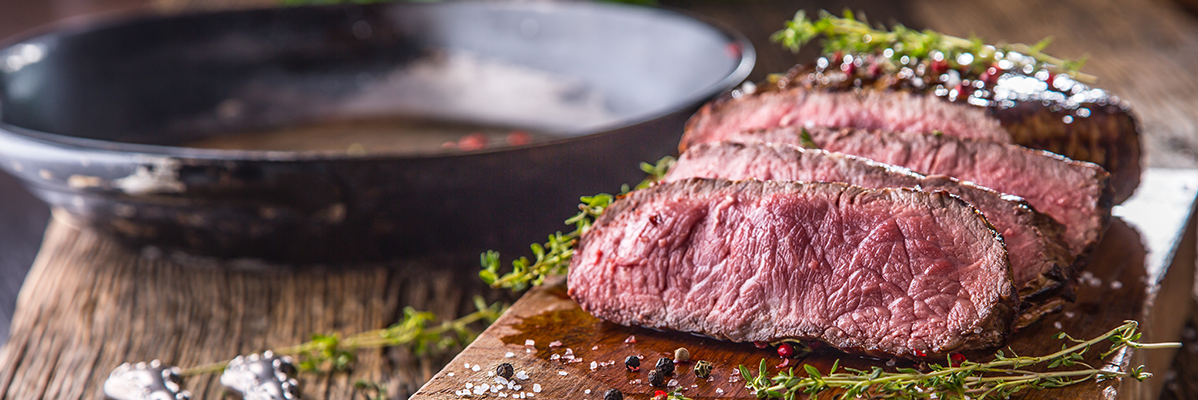
Always slice against the grain, meaning across the muscle fibres, not along them. This shortens the fibres and makes each bite more tender. You can usually see the grain running in one direction, so just cut perpendicular to it.
Finish with a pinch of flaky salt, a few thyme leaves, and a drizzle of the pan juices.
Once your steak is cooked to perfection, you can build steak tacos, or try something bold like this award-winning ale marinated steak. And if you're feeling inspired to go further, find out more about the world's best steak . After you've nailed the basics, there's plenty more to explore.
Cheers to never settling for a grey, overcooked steak again.