Full visibility, full focus: safe running and cycling in winter
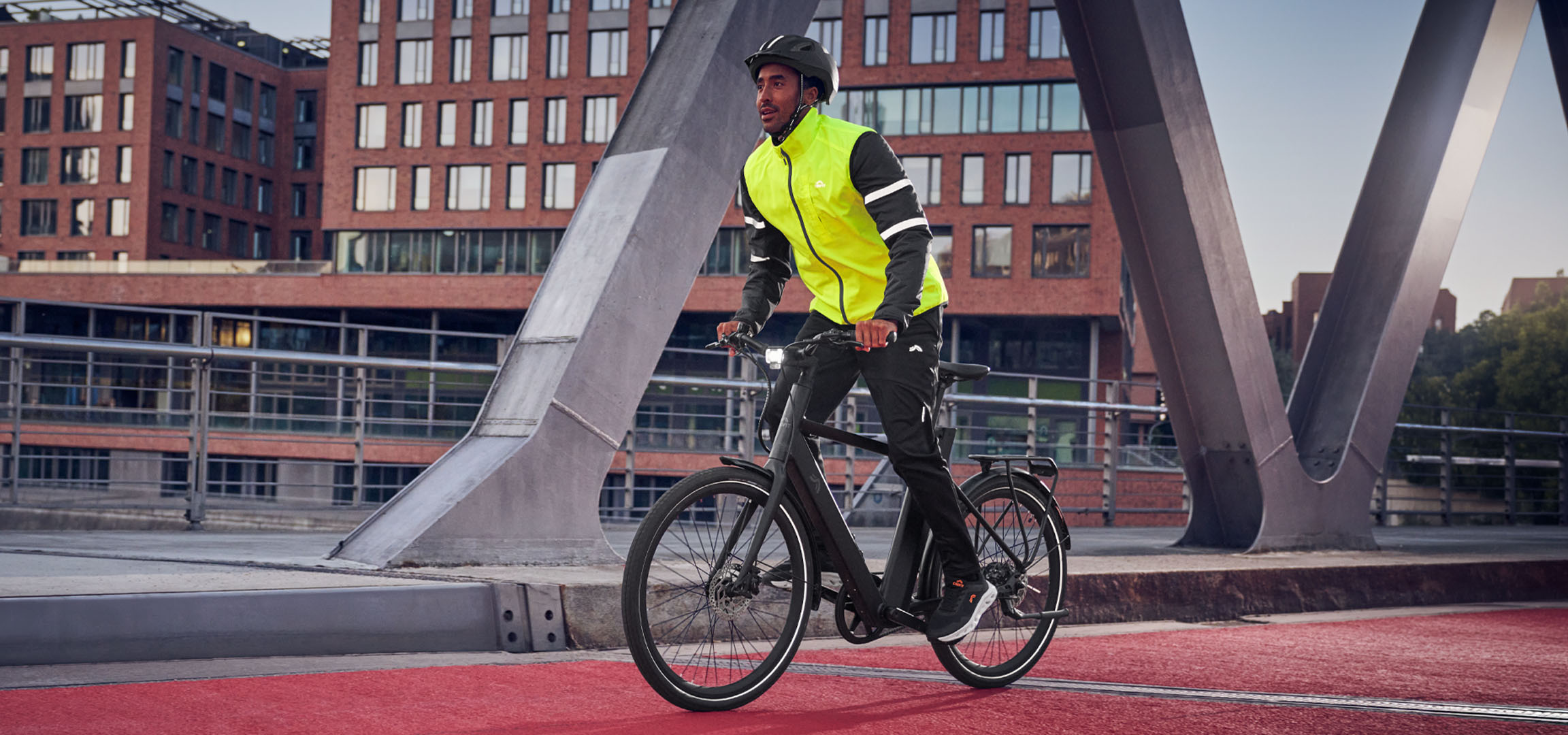
The days are getting shorter and temperatures are dropping, but darkness and twilight are no reason to give up on outdoor training. Whether it is your morning run through the park or your daily cycle to work, staying active outdoors in winter requires clothing and equipment that reliably protect against the wind and cold while guaranteeing maximum visibility in traffic. Find out here how to get perfectly equipped for the darker months with reflective performance fabrics, smart thermal materials and powerful LED lighting.
Why visibility during winter sports is vital
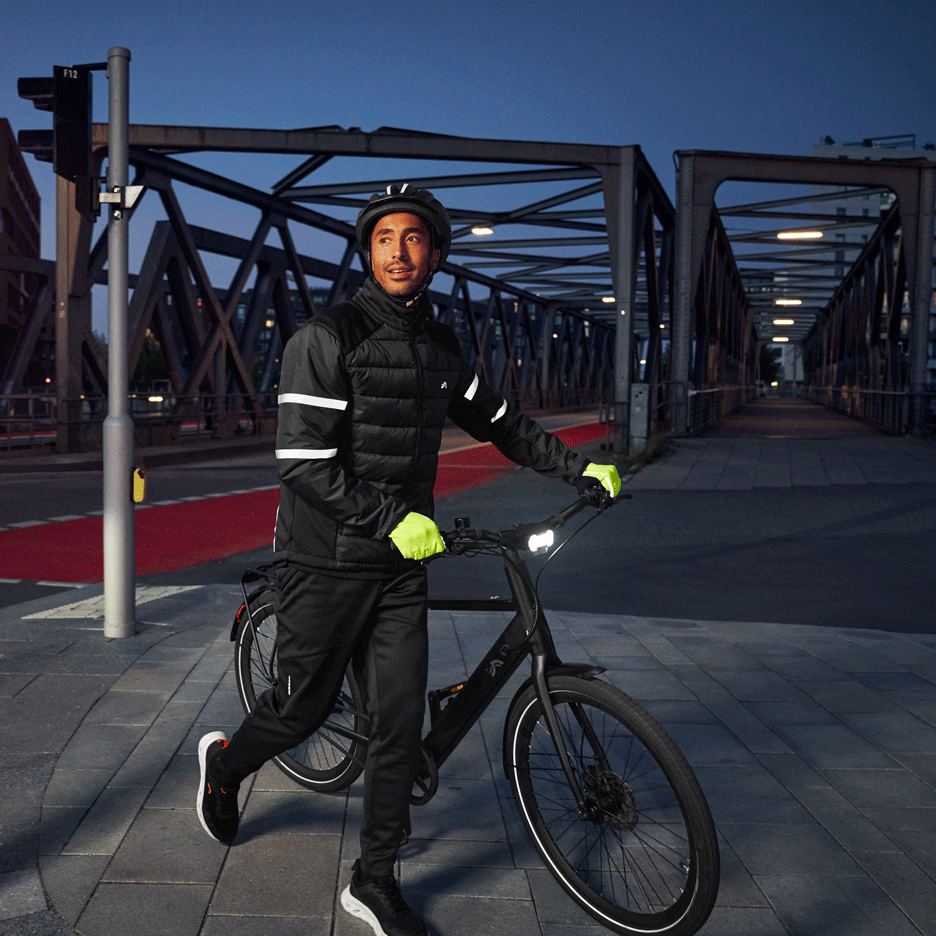
Dark clothing absorbs light! Pedestrians and cyclists in black gear are often only spotted by drivers at dusk from a few metres away. On wet roads, snow or in glare, visibility is reduced even further:
- Increased reaction time: Reflective clothing allows headlights to spot you from up to 150 metres away. This gives drivers precious seconds to react.
- Biomotion effect: Reflectors on moving body parts (legs, arms, hands) instantly signal to other road users, through typical movement dynamics, whether a runner or cyclist is approaching.
- Protection from wind chill: Besides visibility, protection from the cold is key: wind chill makes temperatures feel even colder when cycling or running than they actually are.
The perfect winter outfit: Hybrid jacket & Softshell performance trousers
Whether you're on your bike or out running, the right kit keeps you warm, dry and easily visible:
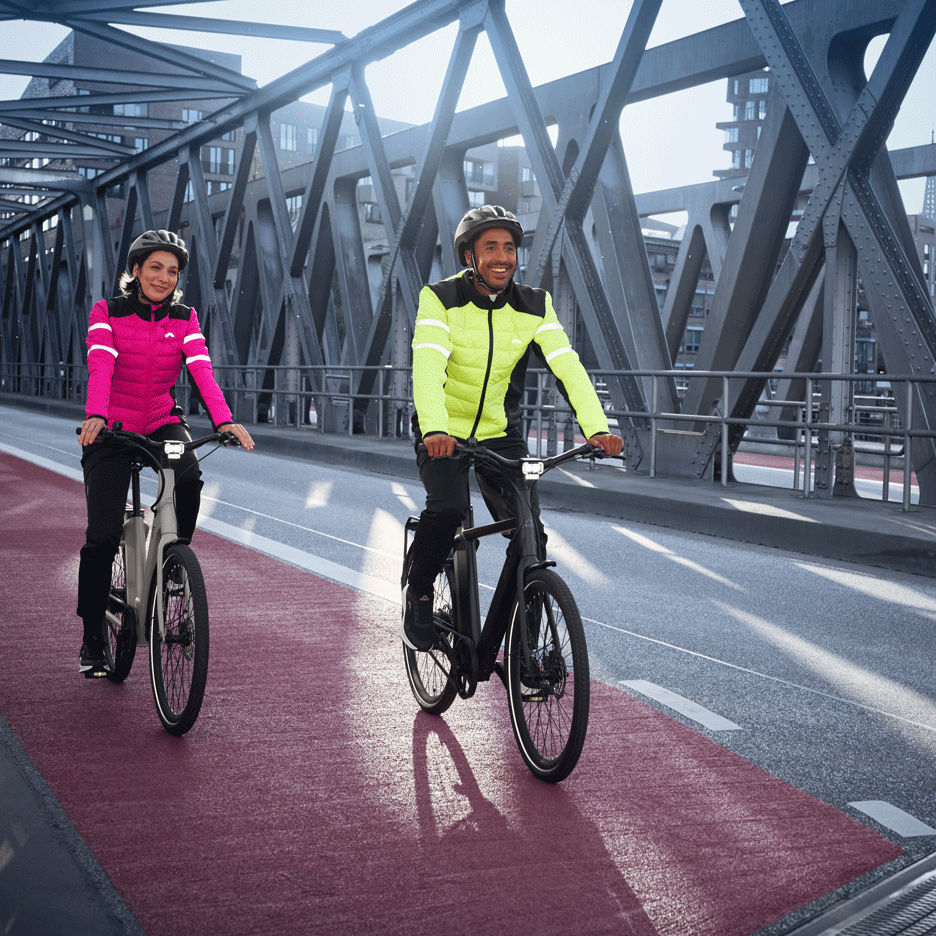
- Thermo Reflective Hybrid Jacket: Combines the best of both worlds: windproof, insulating zones on the chest protect against chilly headwinds, while breathable stretch fabric on the sleeves and back prevents overheating. Large-surface reflective print elements strongly reflect incoming light. Cycling-specific models also feature an extended back section to protect the lower back area.
- Reflective Softshell Performance Trousers: Wind- and water-repellent softshell material protects thighs and knees from the cold. Integrated reflective strips on the lower legs make use of continuous pedalling or running movements for maximum visibility in traffic.
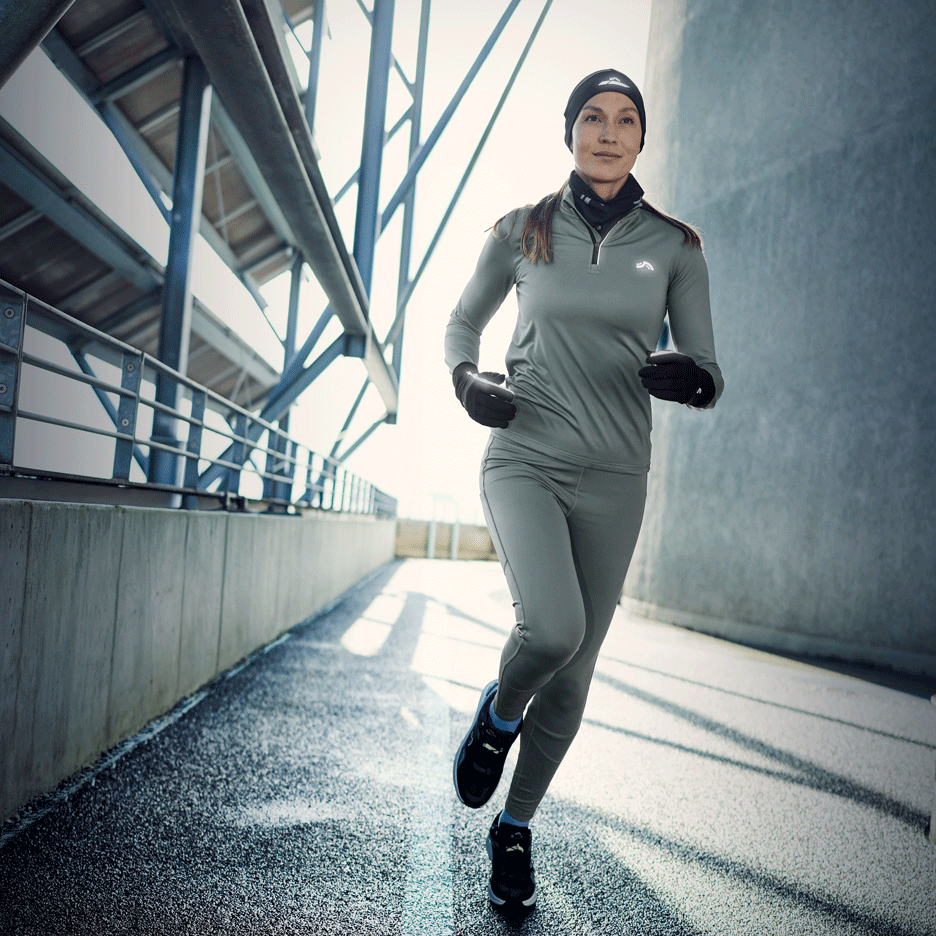
Gloves & Accessories: Protection for Extremities
In cold temperatures, the body loses most of its heat through the hands and head. Cold fingers also make braking on a bicycle more difficult:
- Reflective Thermal Gloves: Windproof outer fabrics keep your hands warm, while reflective elements on the back of the hand ensure turning signals on your bike or hand signals when running in the dark are impossible to miss.
- Hats & Headbands: Flat, breathable hats protect your forehead and ears from getting chilled and fit comfortably under a helmet without causing pressure points when cycling.
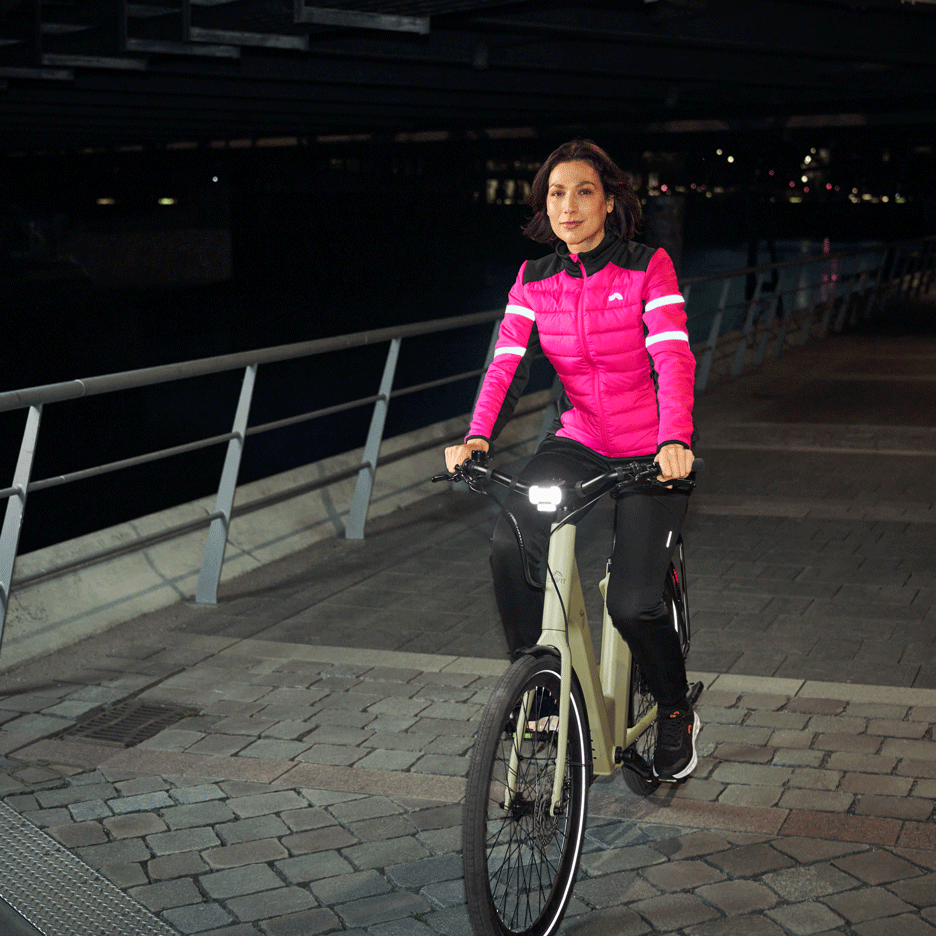
LED Bike Light Set & Active Lights: Tailored Lighting
Reflectors work passively; they require an external light source. Active lighting is therefore the ideal addition for runners and a legal requirement for cyclists:
- LED Bike Light Set (road-legal): A glare-free, rechargeable front headlight reliably illuminates the road, while the LED rear light with wide-angle optics ensures side visibility. USB rechargeable and tool-free mounting.
- LED Clips & Light Bands for Runners: Compact light bands for arms or ankles ensure you shine bright even on unlit park paths or forest trails.
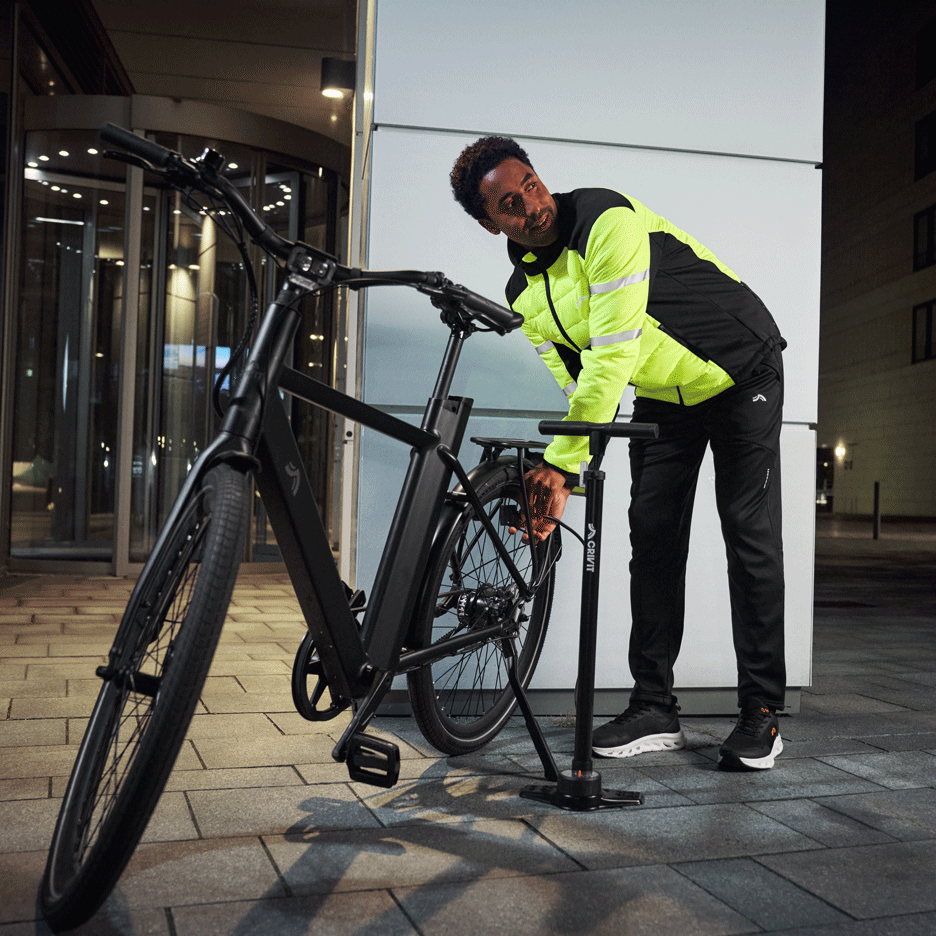
Top safety tips for runners and cyclists
- Choose routes wisely: In winter, stick to well-lit and gritted routes. Avoid poorly visible stretches without a footpath or cycle path.
- Adjust speed & riding style: When it is cold and there is a risk of black ice, safety comes first. Cyclists should slightly lower their tyre pressure to increase the contact area and avoid sudden braking.
- Run against oncoming traffic: If there is no footpath, walk or run on the left side of the road facing traffic. This allows you to see oncoming vehicles in good time.
Frequently Asked Questions (FAQ)
Always wash textiles with reflective prints inside out at a maximum of 30 °C on a
delicates cycle. Do not use fabric softener and do not tumble dry the clothing in order
to protect the reflectors and the membrane function.
No. Active, approved bike lights (front and rear) are legally required on public roads. Reflective clothing serves as a highly effective, additional safety measure.
Yes! Many models are multifunctional. Cycling jackets are usually cut slightly longer at the back, but are also ideal for running on cold days.