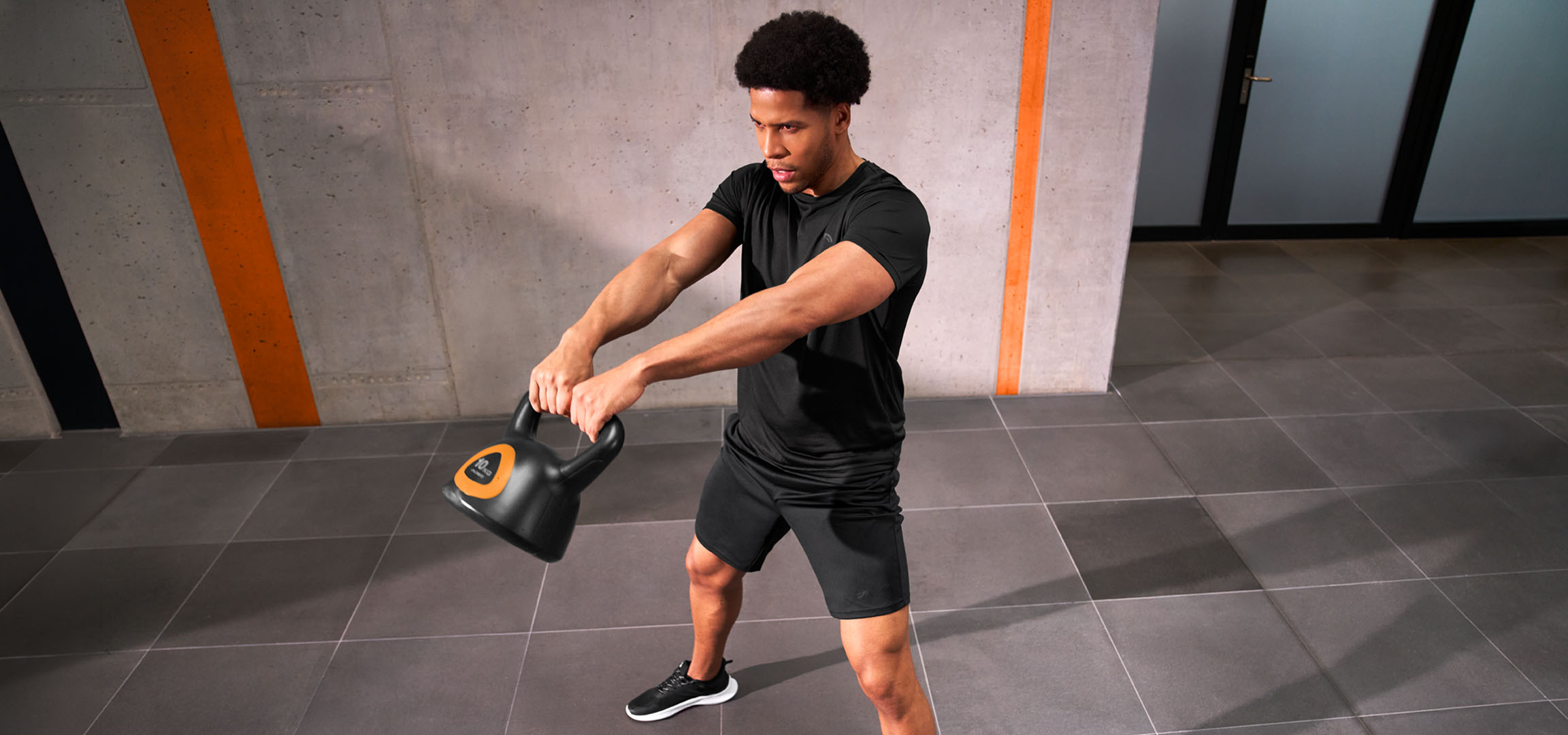
Strong, stronger, kettlebell: The ultimate strength workout for home
Your efficient workout takes place right where you feel most comfortable – at home. With the kettlebell as your core piece of equipment and dumbbells to supplement your training, you can bring an extremely versatile fitness setup into your own four walls. This training doesn't just isolate individual muscles, it activates entire muscle chains. Find out why kettlebell training is unbeatable for functional strength and how you can effectively work your muscles in the smallest of spaces.
1. Why the kettlebell is the perfect tool for muscle building & strength
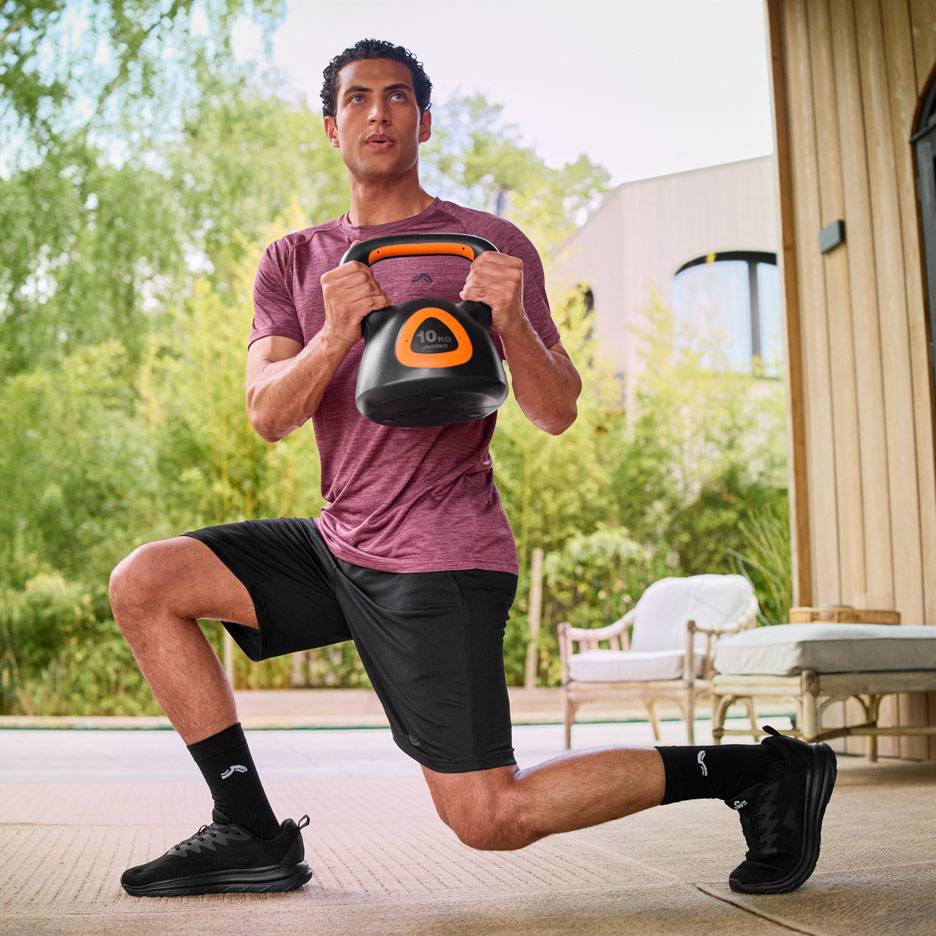
The kettlebell is fundamentally different from classic dumbbells. Because its centre of gravity is outside the palm of your hand, it challenges your body in a completely new way with every movement:
Holistic recruitment of deep muscles (core stability)
Since the mass of the kettlebell is not held directly in your hand, a dynamic lever arm is created in almost every exercise. Your body has to constantly and actively balance this weight. During exercises like kettlebell squats or swings, hundreds of small stabiliser muscles in your core, back, and joints work together. The result: more activated muscle fibres and extremely strong deep muscles.
Correcting muscular imbalances
Many people tend to exert more force with their dominant side. When you use a kettlebell or dumbbell with one arm (unilateral training), each side has to do 100% of the work itself. This corrects muscular imbalances, promotes symmetrical muscle growth, and improves your overall posture in everyday life.
The perfect synergy with dumbbells
While the kettlebell is ideal for dynamic, full-body exercises and swinging movements, dumbbells play to their strengths in targeted control and isolation exercises (such as shoulder presses or rows). Combining both tools offers you maximum variety and a complete full-body workout.
2. The right equipment: choosing kettlebells & dumbbells
To make sure your workout is both safe and effective, choosing the right weights is crucial:
- The right kettlebell weight: Beginners usually start with 6kg to 8kg to learn the technique for basic exercises correctly. Advanced users often choose 12kg to 16kg for legs and back.
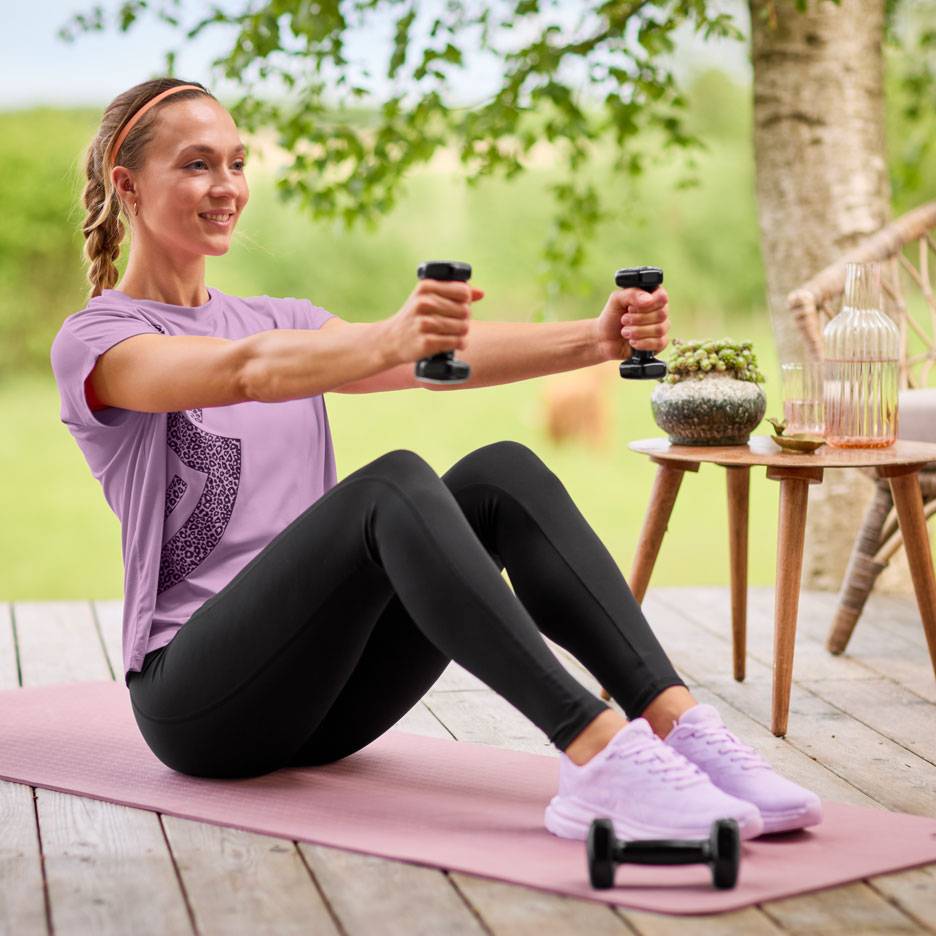
- Dumbbell set to supplement: Adjustable dumbbells are excellent for finely tuning the weight for smaller muscle groups like arms or shoulders.
- Non-slip exercise mat: A stable surface ensures a firm footing and protects the floor during exercises close to the ground.
3. The 10-minute full-body workout at a glance
Short, sharp, and seriously effective: this workout fits seamlessly into any daily routine and makes the most of the benefits of a kettlebell:
- Workout duration: approx. 10 minutes
- Warm-up: Dynamic warm-up to mobilise your hips, shoulders, and spine.
- Main section: 5 functional exercises with a focus on kettlebells & dumbbells.
- Cool-down: Light stretches to lower your heart rate and aid recovery.
4. 5 effective exercises with a kettlebell and dumbbells
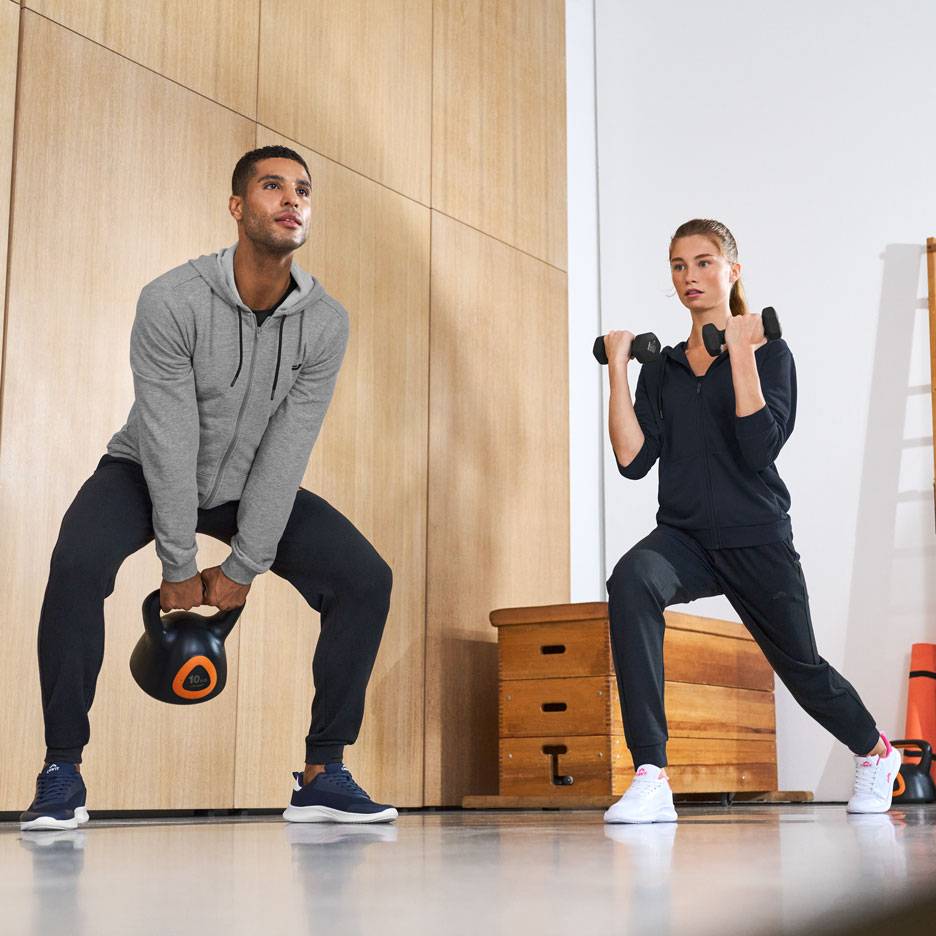
In the main part, we'll do 5 exercises that combine strength, stability and coordination. Pay special attention to controlled execution and correct posture during all sets:
- Sumo squats with kettlebell (with pulses): Hold the kettlebell in front of your chest (goblet position) in a wide stance. The additional pulsing at the lowest point maximises muscle tension in your legs and glutes.
- Diagonal dumbbell press (from a squat): Use dumbbells for this explosive push exercise to specifically target your shoulders and core after your legs.
- Single-arm kettlebell row (unilateral, bent-over): By supporting yourself with one hand, you can work the latissimus dorsi muscle deeply and intensely with the kettlebell.
- Plank with rotation & kettlebell drag: Strengthens the entire abdominal and core muscles as you pull the weight under your body.
- Getting up from the floor (alternating legs with weight): One of the best everyday exercises for functional full-body strength, where you can use either the kettlebell or a dumbbell.
5. Tips for proper technique and maximum training success
Strength training at home requires concentration. Follow these basic rules to get the most out of your workout:
- Power from the hips: For swinging or lifting movements with the kettlebell, the work is primarily done by extending the hips, not by the lower back.
- A straight back is a must: Always keep your spine in a neutral position under load to avoid incorrect strain.
- Progressive overload: Only move on to a heavier weight or increase the number of reps once your form is 100% correct.
6. Frequently Asked Questions (FAQs)
Yes, absolutely! It's just important to start with a light weight and to learn the movements thoroughly. The kettlebell trains body awareness and provides long-lasting posture improvement.
You can get an excellent full-body workout with just a single kettlebell. Dumbbells are an ideal addition, however, to use more finely graded weights for upper body and arm exercises.
2 to 3 sessions per week are more than enough, as a full-body workout is very intensive. Give your body 24 to 48 hours to recover between sessions.